
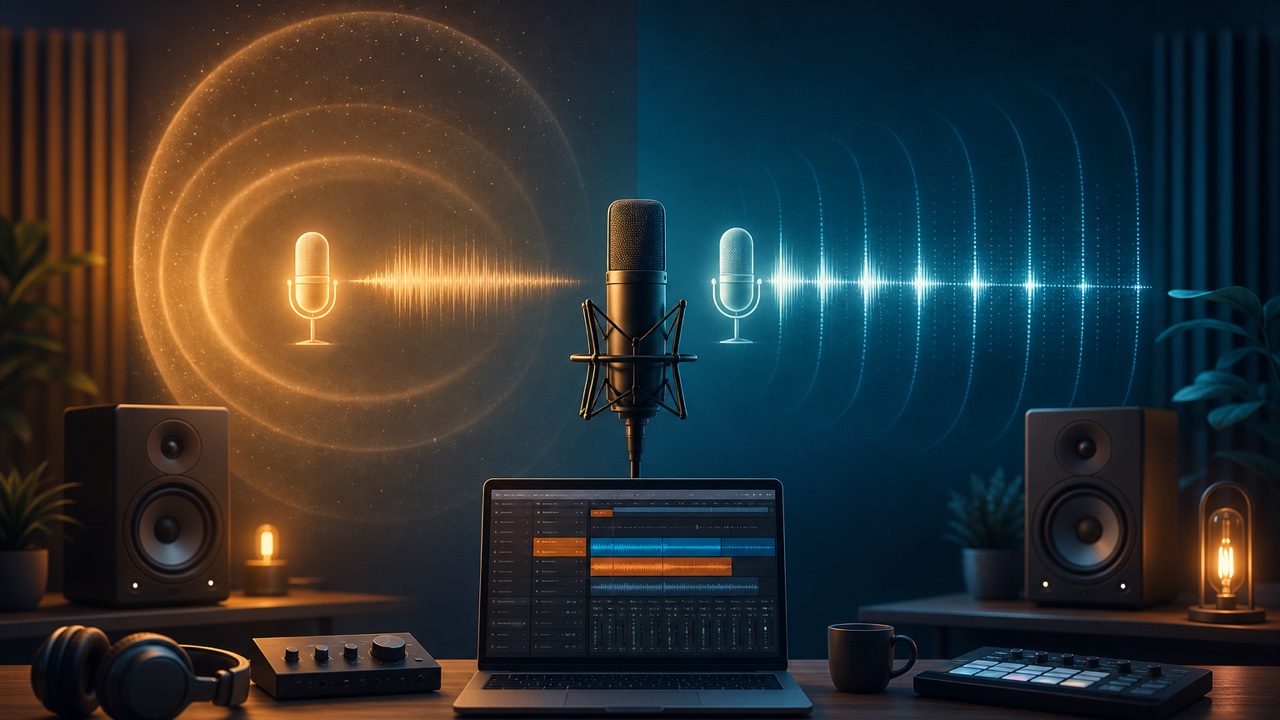
Reverb and delay are both effects that add a sense of space and width to sound. However, using them in the same way can make a mix sound blurry or make vocals difficult to understand.
In simple terms, reverb creates the sound of a room or hall, while delay creates repetitions of a sound. Understand the difference and decide what you want to add before using either effect.
Reverb Creates the Space Where a Sound Is Played
Reverb recreates the many small reflections that return from walls and ceilings. Applied to vocals or instruments, it can add depth and cohesion to a dry sound.
A short reverb can suggest a small room or a nearby source, while a long reverb can suggest a hall or a more distant source. To keep a vocal toward the front, use a shorter decay and add a little pre-delay before the reverb begins, which helps preserve the clarity of the words.
Delay Repeats a Sound
Delay plays the same sound again after the original. It can create anything from a short, single repeat to an echo-like effect with many repetitions.
Synchronizing the delay time to the song’s BPM lets you use it as an eighth-note or quarter-note rhythm. Adding delay only to the ends of vocal phrases can expand the space without obscuring the lyrics.
When to Use Reverb or Delay
- To place sounds in the same space: reverb
- To place a sound farther away: reverb
- To create rhythmic repetitions: delay
- To expand the ends of vocal phrases or fill gaps: delay
- To add width while keeping the lead sound forward: short reverb and subtle delay
Why Use Sends and Aux Tracks?
Reverb and delay are often applied not only as inserts on individual tracks but also by routing signals with a send to an aux track. This allows several instruments to share the same time-based effect and gives the entire song a more cohesive space.
Set the effect on the aux track to 100% wet, with none of the dry signal, and adjust the amount of ambience with each track’s send level. In general, a higher send level makes a sound feel farther away.
Common Beginner Mistakes
Too much reverb can blur the low end and the clarity of words. Applying EQ to the reverb signal and reducing unnecessary low frequencies can make the mix easier to organize.
If the delay feedback is too high, the repetitions may continue too long and fill up the song. Start with only a few repeats and adjust them so they are audible mainly in the gaps.
Settings to Try First
For vocals, send a small amount to a short reverb, then add a tempo-synced delay only if the ends of phrases feel too empty. Rather than choosing a setting that sounds dramatic in solo, start with one that feels slightly understated in the full mix. This makes it easier to create a natural sense of space.