
Pre-production is a common part of preparing to record. What does it involve, and how should you approach it?
This article explains my process.
Why Pre-Production Matters
Pre-production is the preparation performed before the final recording sessions.
Today, when every band member can use a DAW, the term often means building a demo that closely resembles the intended final recording. A simple live rehearsal recording is also sufficient if it serves the same purpose.
The reason for pre-production is simple: to prevent mistakes during the real sessions.
A band may sound solid in rehearsal while individual members miss details in the other parts. Timing differences and conflicting chord interpretations often become obvious only when you listen objectively.
Placing every planned track in a DAW and listening repeatedly is an effective way to hear those details.
This shortens studio time, reduces the risk of costly retakes, and keeps the budget under control.
Do as much pre-production as time allows so disagreements do not emerge several hours into a recording session.
A General Pre-Production Workflow
How should the process work in practice?
I will use my band’s process as an example. It should be useful for other bands as well.
This assumes the arrangement is complete enough for everyone to perform it live. If it is not, finish arranging the song in rehearsal first.
Prepare for the Drum Recording
I prefer to establish the rhythm tracks first, so I begin with drums. Asking the drummer to perform without any preparation is difficult, however.
Create a comfortable guide track for the drummer.
Preferences vary, but useful guides include a temporary vocal, an instrument clearly outlining the chords, and bass. If only one is needed, a simple guitar or piano chord track may be enough.
Add a click on a separate track. I often load a drum instrument and use a cowbell because a DAW’s standard click can be difficult to hear.
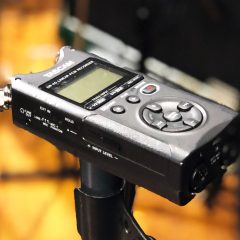
Record a Rough Drum Take in a Rehearsal Studio
Once the guide is ready, book a rehearsal studio and record the drums.
The following article explains the preparation and recording process in detail.
Record the Other Parts at Home
I see the final stage as assembling every track required for the real recording, so add the parts other than drums.
In my band, the bassist and I both used Logic. I could send my project file directly and have the bass recorded into it.
If members use different DAWs, send them a rough stereo bounce. After they record their part, have them return an individual audio file. A computer is not essential for pre-production; our vocalist sometimes recorded guide vocals in GarageBand on an iPhone.
As the guitarist, I prepared every guitar part and the harmonies. I also added a rough piano part. Divide the work according to each member’s role.
Listen Together
Finally, have everyone listen to the complete demo and look for problems. Confirm carefully that it is ready for recording.
If you find issues, collecting them in a shared spreadsheet can make them easier to manage.
Conclusion
I used to rush through pre-production and then discover on the recording day how a drum phrase was played or that notes in two chord voicings conflicted.
Thorough pre-production helps avoid those problems.
You can also review the definition in the Music Glossary: Pre-Production.