
Effects pedals shape a guitar’s sound, and guitarists spend endless time discussing overdrive and distortion in particular.
Here are the points I check when choosing a drive pedal.
Choose the Type of Drive: Overdrive, Distortion, or Something Else
First decide what kind of drive sound you want.
Use artists you admire as references. If you want a dense wall of sound, choose a high-gain distortion. For a lighter, more dynamic sound, overdrive may be closer.
Individual pedals vary even within those categories, so treat this as choosing a general direction.
Consider How You Will Use It
Alongside the general sound, decide on the pedal’s job.
Will it be used for rhythm or solos? For low riffs or full-string funk patterns? Will it boost another pedal, or provide enough gain by itself?
Narrow the intended use in this way.
For a first pedal, choose something versatile. After buying another drive later, the first can still serve as a booster.
Points to Check When Choosing a Drive Pedal
Once you know the broad type, compare specific pedals and manufacturers.
Check the following points.
Does It Respond the Way You Expect?
Online demonstrations are helpful but often inconclusive because the guitar and player strongly affect the result.
Use online information to narrow the choices, then audition the finalists yourself.
Some pedals provide less gain than expected, while others become so saturated that notes lose definition. Playing one reveals these differences.
Do the Notes Remain Clear Through the Distortion?
Make sure the original notes remain recognizable. Avoid pedals that become indistinct; you should still hear what you are playing.
This relates directly to clarity and body in a mix. A pedal that obscures the source will struggle to cut through a band.
Also avoid using too much gain. A little less distortion than sounds exciting alone often works better for the audience.
Do You Actually Need All Those Features?
Some feature-heavy pedals do many things without excelling at any of them.
Numerous controls are not useful if you never touch most of them.
Buy those features when you genuinely need them.
In my experience, if a multi-channel drive has one channel you love, the others rarely fit equally well. Two different focused pedals may be more useful.
Conclusion
These are personal criteria, so use them as a starting point, try many pedals, and buy the one that convinces you.
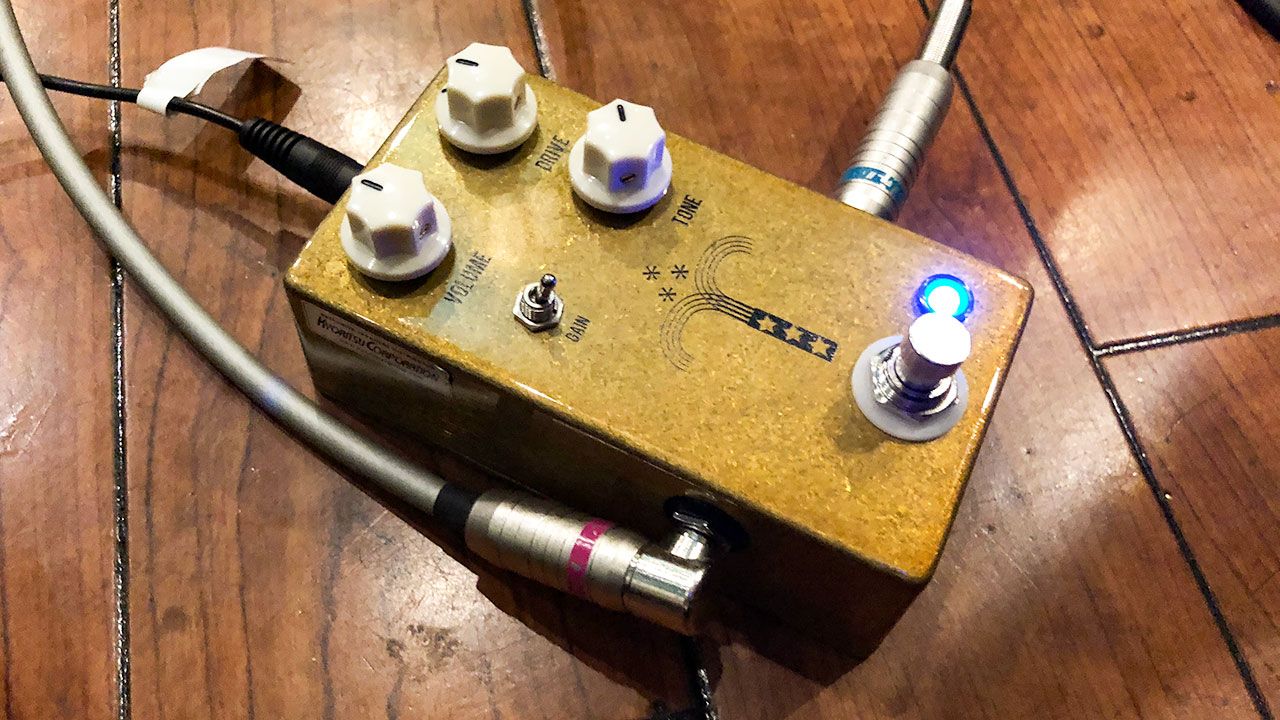
When this article was written, my main drive was the Morning Glory. It cut through well, sounded full, responded beautifully to guitar volume, and was enjoyable to play.